Skip to content
Mulch & GravelCalculator

How much mulch, gravel or soil do you need?

Measure your area, pick a depth, and get the answer in cubic yards, tons and bags, the way your supplier sells it. Free, and nothing to sign up for.

  • Yards, tons and bags in one answer
  • Weights from supplier charts
  • Prices with named sources
Area to coverMeasure the longest and widest points

Tap a common depth or type your own.

Yards usually suggest 10% for stone and gravel, 5% for mulch and soil.

Results update as you type. Calculate saves your numbers in the page link.

Calculators for each material

Each one has depths, bag sizes and weights for that material, plus advice on what to buy and what it costs.

Three numbers and you’re ready to order

  1. 1. Measure the area

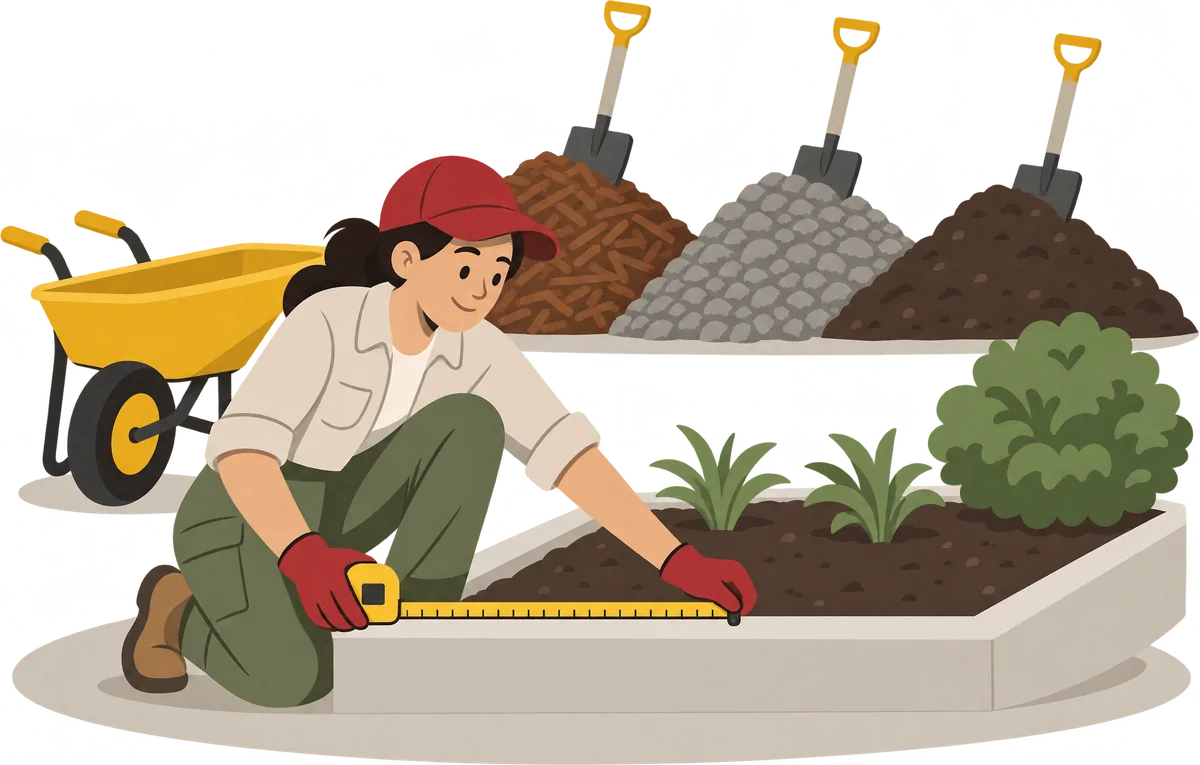
    Length and width in feet, at the longest and widest points. Odd shapes? Add a second or third area and the calculator adds them up.

  2. 2. Pick a depth

    Tap a common depth for your project or type your own. Each calculator suggests depths that suit its material.

  3. 3. Order in their unit

    You get cubic yards, tons and bags together, so you can read the right number to whoever answers the phone at the yard.

What landscape materials cost

These are the published national ranges for bulk material this year, before delivery. Local prices swing a lot with how far you are from a quarry, so use them to sanity-check a quote, then type your yard’s actual price into the calculator for a real total.

What you're buyingPublished priceSource
Gravel or crushed stone$10–$50per ton[1]
Mulch, bulk$25–$100per cubic yard[2]
Topsoil$10–$55per cubic yard[3]
Garden soil$30–$50per cubic yard[3]
River rockBased on 1-4 in. river rock$45–$130per ton[4]
SandMaterial only$15–$50per ton[5]
  1. [1] HomeGuide, How Much Does Crushed Stone or Gravel Cost? (2026), updated Dec 2025.
  2. [2] HomeGuide, How Much Does Mulch Cost? (2026), updated Apr 2025.
  3. [3] Angi, What Is the Cost of Topsoil? [2026 Data], updated Oct 2026.
  4. [4] HomeGuide, How Much Do Landscaping River Rocks and Stones Cost? (2026), updated Dec 2025.
  5. [5] HomeGuide, How Much Does Sand Delivery Cost? (2026), updated Jun 2026.

Prices as published by each source, checked November 2026. They are national ranges, not quotes: your local yard can be well above or below them.

Each calculator page breaks these down further, by type and by bag, with the sources listed underneath: gravel, mulch, topsoil, garden soil and compost, rock and stone and sand.

What one cubic yard covers

Every page on this site runs on one rule: a cubic yard spread 1 inch deep covers 324 square feet. Divide 324 by your depth in inches and you know what a yard covers.

Square feet one cubic yard covers, by depth

Every extra inch of depth shrinks the area. Exact figures in the table below.

  • 1 in324 sq ft
  • 2 in162 sq ft
  • 3 in108 sq ft
  • 4 in81 sq ft
  • 6 in54 sq ft
Depth1 cubic yard coversYards per 100 sq ft
1 in324 sq ft0.31 yd³
2 in162 sq ft0.62 yd³
3 in108 sq ft0.93 yd³
4 in81 sq ft1.23 yd³
6 in54 sq ft1.85 yd³
12 in27 sq ft3.70 yd³

How the result is calculated

  1. Cubic feet = length (ft) × width (ft) × depth (in) ÷ 12, added up across every area you enter.
  2. Extra adds a percentage for settling, compaction and spills: 10% for stone and gravel and 5% for mulch and soil by default.
  3. Cubic yards = cubic feet ÷ 27. Tons = cubic yards × the material’s weight per yard. Bags = cubic feet ÷ bag size, rounded up.

The weights come from quarry and landscape-supply charts, and each one is listed with its source on the methodology page. Got a quote in tons and want yards? Use the yards to tons converter. Comparing a pallet of bags against a bulk load? The bags to yards converter covers every common bag size.
Frequently asked questions

How do I calculate how much landscape material I need?
Measure the length and width in feet and decide the depth in inches. Then length × width × depth ÷ 324 gives you cubic yards. Multiply yards by the material’s weight per yard for tons, or divide cubic feet by the bag size for bags. The calculator above does all three and adds a little extra for settling.
How much does a cubic yard cover?
324 square feet at 1 inch deep. Divide by your depth in inches: 162 sq ft at 2 inches, 108 at 3 inches, 81 at 4 inches.
Should I order in yards, tons or bags?
Order in whatever unit your supplier quotes. Quarries and stone yards usually sell by the ton. Mulch, soil and compost yards sell by the cubic yard. Garden centers sell bags. The result panel shows all three, so you can compare quotes directly.
How accurate are these calculators?
The volume is exact for the measurements you enter. Weight depends on moisture and how packed the material is, so we show a range and list the supplier weight charts behind each figure on the methodology page. Treat tons as a close estimate and confirm with your yard.
Can I use metric units?
Yes. Each measurement has its own unit picker (feet, inches, yards, meters or centimeters), and the result shows cubic meters and metric tonnes beside yards and tons.

Before you call the yard

A few things landscape yards ask about, or wish customers had asked, before a load goes out.

  • Round up, not down. A second delivery for half a yard costs far more than a bit of leftover. Keep the extra for topping up next year.

  • Ask about the minimum load. Many yards charge a flat delivery fee or a minimum order. On a small job, that fee can cost more than the material.

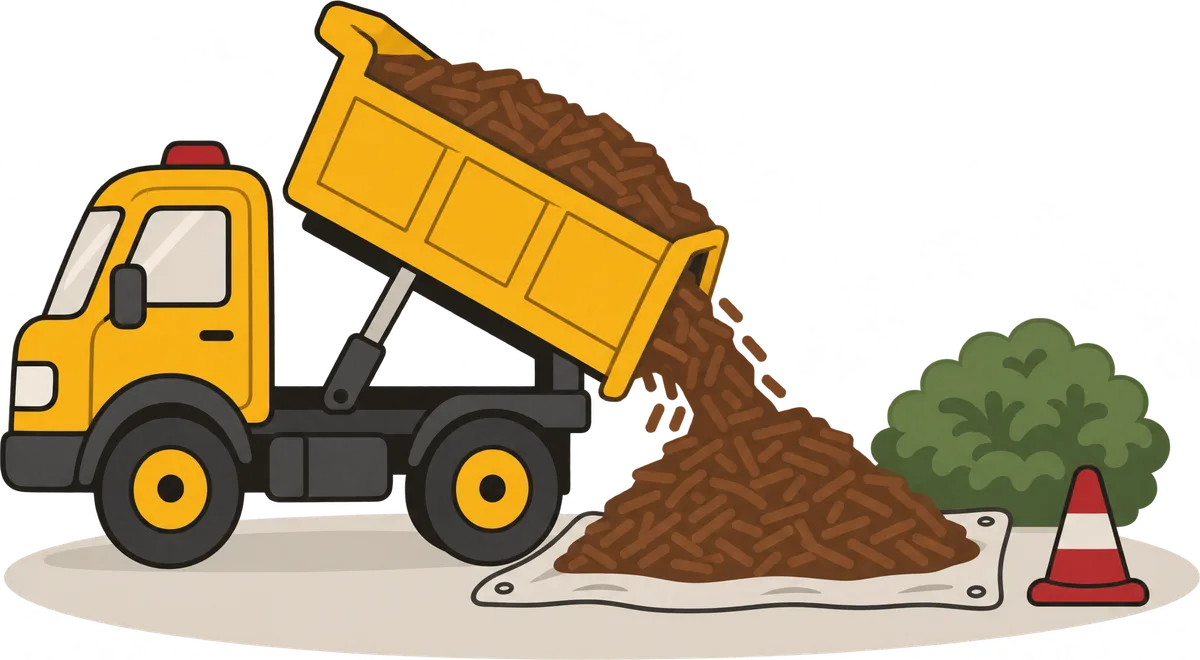
  • Check the truck can reach. A dump truck needs a wide, firm path. Decide where the pile goes and put a tarp down before it arrives.

  • Compare in the same unit. One quote in tons and another in yards aren’t comparable until you convert. The calculator shows both side by side.

Where our numbers come from

The volume math is simple and exact. The weights are the part most calculators guess at, so we take ours from published quarry and landscape-supply charts and show the range, not just one number. Prices come from named cost guides and supplier pages, with the date we checked them. When a source disagrees with another, we show both.

See our sources About this site